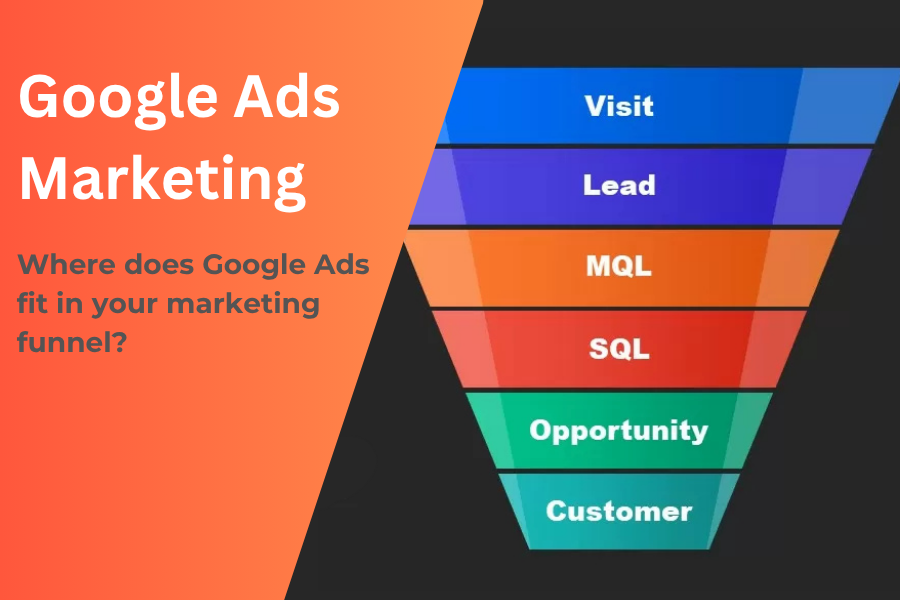
A well-structured marketing funnel is the backbone of any successful digital strategy. It maps out how potential customers move from initial awareness to becoming loyal buyers. But one question many businesses still ask is this: where exactly do full funnel Google Ads strategy fit into the marketing funnel?
The short answer is everywhere.
Google Ads is one of the few marketing channels that can support every stage of the funnel when used strategically. From introducing your brand to completely new audiences to capturing high-intent users who are ready to buy, a properly managed google ads campaign can guide users through the entire customer journey.
In this article, we will break down how google ads align with each stage of the funnel, how to use them effectively, and how businesses in the Philippines can maximize results with the right approach.
Understanding the Marketing Funnel
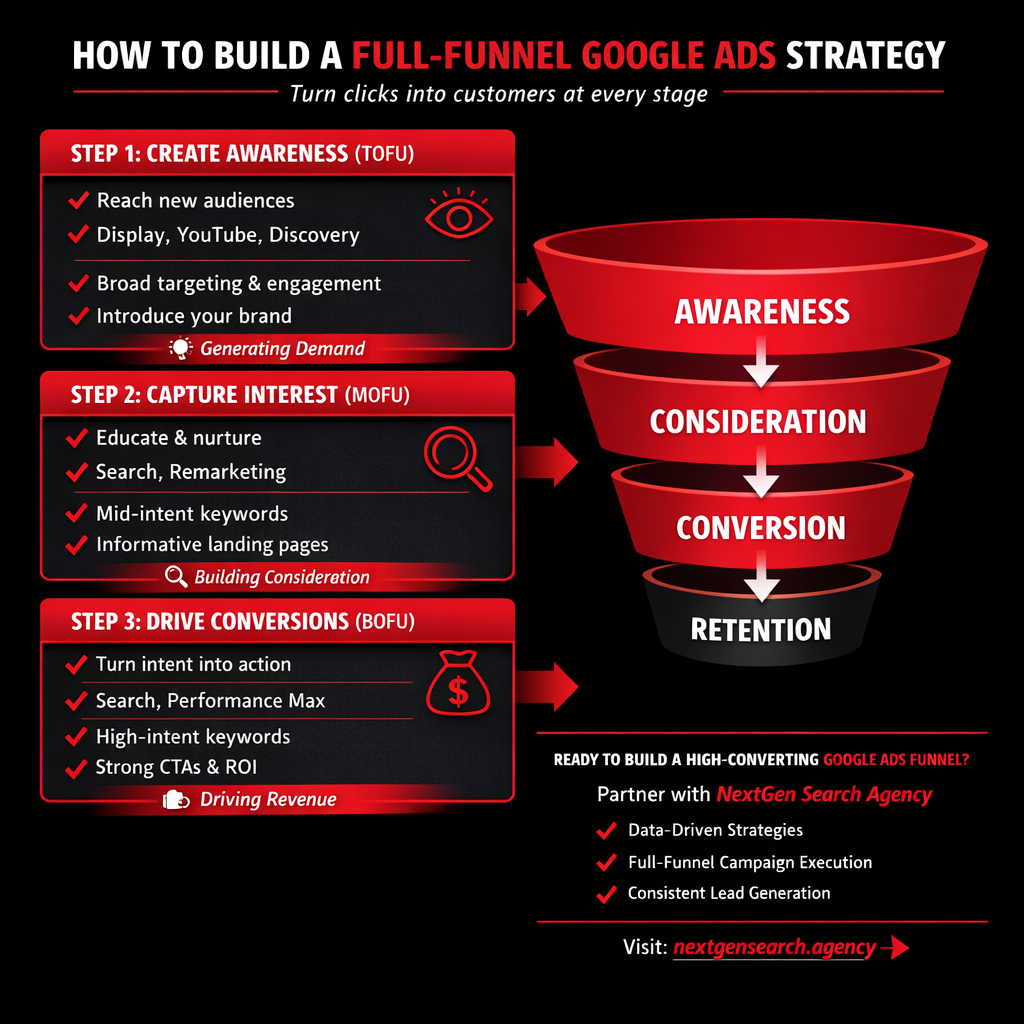
Before diving into tactics, it helps to define the classic marketing funnel. While models vary, most funnels are divided into three main stages:
- Top of Funnel (TOFU) – Awareness
- Middle of Funnel (MOFU) – Consideration
- Bottom of Funnel (BOFU) – Conversion
Some marketers also include a fourth stage:
- Post-Purchase – Retention and Loyalty
Each stage represents a different mindset. Your audience is not always ready to buy immediately, so your messaging and strategy must adapt accordingly.
This is where google ads becomes powerful. It allows you to meet users at every stage with the right message at the right time.
Google Ads at the Top of the Funnel (Awareness Stage)
At the top of the funnel, your goal is simple. Get noticed.
Users at this stage may not even know your brand exists. They are browsing, researching, or casually exploring solutions to a problem.
How Google Ads Supports Awareness
Google Ads offers several campaign types that are ideal for awareness:
- Display campaigns
- YouTube ads
- Discovery campaigns
These formats focus on visibility rather than immediate conversions. They place your brand in front of users while they browse websites, watch videos, or scroll through content.
Key Strategies for TOFU Campaigns
1. Focus on broad targeting
Use in-market audiences, affinity audiences, and custom segments to reach users who match your ideal customer profile.
2. Prioritize engaging creatives
At this stage, your ads should educate or spark curiosity rather than sell aggressively.
3. Optimize for impressions and reach
Instead of chasing conversions, measure success through metrics like impressions, view rate, and brand lift.
Example
A real estate company in the Philippines might use YouTube ads to showcase new property developments. The goal is not to close a sale immediately, but to introduce the brand and build recognition.
Google Ads in the Middle of the Funnel (Consideration Stage)
Once users are aware of your brand, they move into the consideration stage. Here, they are comparing options, reading reviews, and evaluating solutions.
This is where google ads start to become more targeted and intent-driven.
How Google Ads Supports Consideration
Search campaigns play a major role here. Users actively search for solutions using keywords that reflect interest but not necessarily purchase intent.
Examples of consideration keywords:
- “best CRM software Philippines”
- “affordable SEO services”
- “top digital marketing agencies”
Key Strategies for MOFU Campaigns
1. Target high-intent keywords
Use keyword research to identify phrases that indicate users are evaluating options.
2. Use compelling ad copy
Highlight value propositions such as expertise, pricing, or unique benefits.
3. Build strong landing pages
Your landing page should provide useful information, case studies, or comparisons to help users make informed decisions.
4. Leverage remarketing
Re-engage users who interacted with your top-of-funnel campaigns but did not convert.
Example
An eCommerce brand might run search ads targeting users searching for “best running shoes under 5000 pesos.” These users are actively comparing products and are closer to making a decision.
Google Ads at the Bottom of the Funnel (Conversion Stage)
This is where the magic happens.
At the bottom of the funnel, users are ready to take action. They are searching for specific products, services, or brands with clear intent to purchase.
How Google Ads Drives Conversions
Search campaigns dominate this stage, particularly with high-intent keywords such as:
- “buy laptop Philippines”
- “hire google ads agency”
- “book hotel in Manila”
Shopping ads and Performance Max campaigns are also highly effective for eCommerce businesses.
Key Strategies for BOFU Campaigns
1. Bid aggressively on high-converting keywords
These are your money keywords. Allocate more budget here.
2. Use strong calls to action
Encourage users to take immediate action with phrases like “Get a Quote,” “Book Now,” or “Shop Today.”
3. Optimize for conversions
Use conversion tracking and smart bidding strategies to maximize ROI.
4. Highlight trust signals
Include testimonials, reviews, and guarantees to reduce hesitation.
Example
A local service provider might target keywords like “plumbing services near me” with a clear call to action and a phone number for immediate inquiries.
Google Ads for Retention and Loyalty
Many businesses stop at conversions, but the funnel does not end there.
Retention is just as important as acquisition.
How Google Ads Supports Retention
Remarketing campaigns are the key tool here. They allow you to reconnect with past customers and encourage repeat purchases.
Key Strategies for Retention
1. Upsell and cross-sell
Promote complementary products or services to existing customers.
2. Offer exclusive deals
Reward returning customers with special discounts.
3. Stay top of mind
Use display ads to maintain brand visibility.
Example
An online store can show ads featuring new arrivals to customers who previously made a purchase.
The Role of Audience Targeting Across the Funnel
One of the biggest strengths of google ads is its advanced targeting capabilities.
You can segment audiences based on:
- Search behavior
- Website interactions
- Demographics
- Interests
This allows you to tailor your messaging for each stage of the funnel.
For example:
- New users see educational content
- Returning users see product-focused ads
- Past customers see loyalty offers
This level of personalization improves engagement and conversion rates.
Aligning Google Ads With Content Strategy
Google Ads works best when paired with strong content.
Each stage of the funnel should have corresponding content:
- TOFU: Blog posts, videos, guides
- MOFU: Case studies, comparisons, webinars
- BOFU: Product pages, testimonials, offers
Your ads should lead users to content that matches their intent.
This alignment creates a seamless user experience and increases the likelihood of conversion.
Measuring Success Across the Funnel
Different stages require different metrics.
TOFU Metrics
- Impressions
- Reach
- Click-through rate
MOFU Metrics
- Time on site
- Pages per session
- Engagement rate
BOFU Metrics
- Conversion rate
- Cost per acquisition
- Return on ad spend
Understanding these metrics helps you optimize your google ads campaigns more effectively.
Common Mistakes to Avoid
Even though google ads is powerful, many businesses struggle due to common mistakes.
1. Focusing only on bottom-of-funnel campaigns
This limits your growth and ignores potential customers earlier in the journey.
2. Poor keyword targeting
Targeting irrelevant keywords leads to wasted budget.
3. Weak landing pages
Even the best ads will fail if the landing page does not convert.
4. Ignoring data
Failing to analyze performance data prevents continuous improvement.
Why Google Ads Is Essential for Businesses
The digital landscape is becoming increasingly competitive. More businesses are investing in online marketing, making it harder to stand out.
Google Ads provides a measurable and scalable way to:
- Reach targeted audiences
- Generate consistent leads
- Compete with larger brands
For local businesses, it also offers strong geo-targeting capabilities, allowing you to focus on specific cities or regions.
Building a Full-Funnel Google Ads Strategy
To maximize results, businesses should adopt a full-funnel approach.
Step 1: Create Awareness Campaigns
Use display and video ads to introduce your brand.
Step 2: Capture Interest
Run search campaigns targeting mid-intent keywords.
Step 3: Drive Conversions
Focus on high-intent keywords and optimized landing pages.
Step 4: Retarget and Retain
Use remarketing to bring users back and increase lifetime value.
This structured approach ensures that no opportunity is missed.
Conclusion
Google Ads is not just a tool for generating quick leads. It is a comprehensive platform that supports every stage of the marketing funnel.
From building awareness to driving conversions and fostering loyalty, google ads can play a critical role in your overall marketing strategy when used correctly.
However, achieving consistent results requires more than just running ads. It requires strategy, data analysis, and continuous optimization.
This is where working with the right partner makes a difference.
If you want to build a high-performing funnel that delivers real business results, NextGen Search Agency can help you get there. With a deep understanding of google ads, the team focuses on creating campaigns that not only drive traffic but also convert into measurable revenue.
Ready to take your marketing funnel to the next level?
Visit nextgensearch.agency and connect with a team that knows how to turn clicks into customers.
Resources
- Google Ads Help Center
- Google Keyword Planner
- Think with Google
- HubSpot Marketing Funnel Guide
- WordStream Google Ads Benchmarks


1 Comment
Comments are closed.