
Search engines have become incredibly good at understanding content, but they still need clear signals. This is where structured data plays a crucial role. When used correctly, structured data helps search engines understand what your pages are about, how different elements relate to each other, and how your content should be displayed in search results.
For businesses investing in SEO, structured data is no longer optional. It supports better visibility, improved click through rates, and eligibility for rich results such as reviews, FAQs, and product listings. This guide explains what structured data is, why it matters for SEO, and how to implement it properly without overcomplicating the process.
The goal of this article is informational. You will learn practical ways to use structured data on your website, choose the right schemas, avoid common mistakes, and measure performance over time.
What Is Structured Data
Structured data is a standardized format used to provide information about a page and classify its content. It allows search engines to interpret your content more accurately by adding context to elements like products, articles, events, organizations, and people.
Instead of guessing what a piece of content represents, search engines can read structured data and clearly understand its meaning. For example, structured data can tell Google that a number is a product price, that a set of stars represents a review rating, or that a block of text is an FAQ section.
Most structured data implementations follow standards defined by Schema.org. This shared vocabulary is supported by major search engines and helps ensure consistency across the web.
Why Structured Data Matters for SEO
Structured data does not directly improve rankings, but it strongly supports SEO performance in other ways. Its biggest impact comes from enhanced visibility and improved user engagement.
Here are the main SEO benefits of structured data:
- Eligibility for rich results such as review stars, FAQs, breadcrumbs, and product details
- Improved click through rates due to enhanced search listings
- Better content understanding for search engines
- Stronger alignment with search intent
- Support for voice search and AI driven search experiences
When your pages appear with rich results, they often stand out visually. This increased prominence can lead to higher organic traffic, even if rankings stay the same.
Types of Structured Data Commonly Used in SEO
Not all structured data types are relevant for every website. Choosing the right ones depends on your content and business goals.
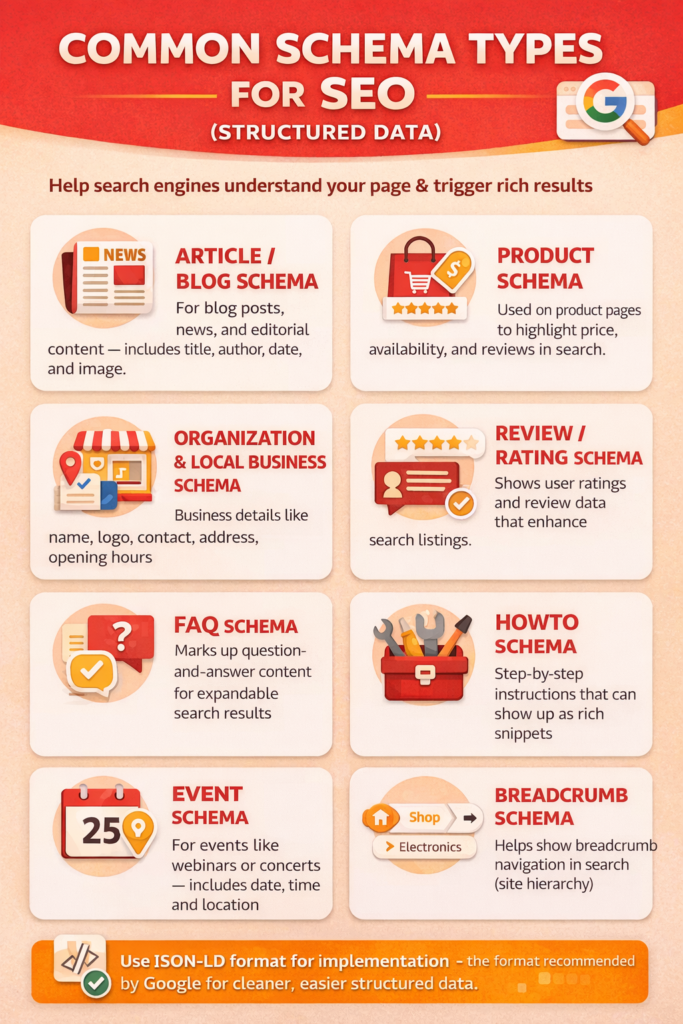
Article and Blog Schema
Article structured data helps search engines understand blog posts, news articles, and long form content. It includes information such as headline, author, publish date, and featured image.
This schema is especially useful for content driven websites and businesses investing in thought leadership.
Organization and Local Business Schema
Organization structured data provides details about your business, including name, logo, contact information, and social profiles. Local business schema adds location specific details like address, opening hours, and service areas.
These schemas support brand visibility and local SEO performance.
Product Schema
Product structured data is essential for ecommerce websites. It allows search engines to display product prices, availability, and reviews directly in search results.
When implemented correctly, this schema can significantly improve click through rates for product pages.
Review and Rating Schema
Review structured data highlights customer feedback and star ratings. It is commonly used alongside product, service, and local business schemas.
Search engines have strict guidelines for review schema, so accuracy and transparency are critical.
FAQ and How To Schema
FAQ and How To structured data help content qualify for expanded search results. These formats are ideal for informational pages that answer common questions or provide step by step guidance.
This type of structured data aligns well with user intent and can drive highly qualified traffic.
Breadcrumb Schema
Breadcrumb structured data clarifies site hierarchy. It improves how URLs appear in search results and enhances usability.
How Structured Data Works Behind the Scenes
Structured data is added to your website code using a specific format. The most common formats include:
- JSON LD
- Microdata
- RDFa
JSON LD is the preferred format recommended by Google. It is easier to manage, less intrusive, and does not require changes to visible content.
When search engines crawl your pages, they read the structured data and use it to interpret your content. If your implementation meets eligibility criteria, your page may appear with rich results.
How to Find the Right Schema for Your Website
Choosing the correct schema is one of the most important steps in using structured data effectively.
Start by identifying the primary purpose of each page. Ask questions like:
- Is this page informational or transactional
- Does it represent a product, service, article, or business entity
- What action do you want users to take
Once the purpose is clear, explore Schema.org to find relevant schema types. Focus on schemas that closely match your content rather than forcing multiple schemas onto a single page.
It is better to implement a few accurate schemas than many loosely related ones.
Step by Step Guide to Implementing Structured Data
Step 1: Audit Existing Pages
Review your current pages and identify opportunities for structured data. Blog posts, service pages, product pages, and contact pages are often good starting points.
Step 2: Choose the Appropriate Schema
Select schemas that match your content. For example, use Article schema for blog posts, Product schema for ecommerce pages, and Local Business schema for location pages.
Step 3: Generate the Markup
You can create structured data manually or use tools like schema generators. Always ensure the information matches the visible content on the page.
Step 4: Add the Markup to Your Site
Implement JSON LD in the head or body of your page. This method keeps your HTML clean and easier to maintain.
Step 5: Test Your Structured Data
Use testing tools to validate your implementation. Look for errors, warnings, and eligibility issues.
Step 6: Monitor Performance
Track impressions, clicks, and enhancements in Google Search Console. Structured data performance should be reviewed regularly.
Best Practices for Using Structured Data
Following best practices helps ensure your structured data supports SEO without creating issues.
- Match structured data to visible content
- Use recommended properties whenever possible
- Avoid misleading or spammy markup
- Keep data accurate and up to date
- Follow search engine guidelines strictly
Structured data should always reflect reality. Misuse can lead to manual actions or loss of rich results.
Common Structured Data Mistakes to Avoid
Even experienced SEO teams can make mistakes with structured data.
Some of the most common issues include:
- Marking up content that is not visible to users
- Using incorrect schema types
- Adding review schema to pages without genuine reviews
- Forgetting to update structured data after content changes
- Ignoring errors reported in Search Console
Avoiding these mistakes protects your site from penalties and ensures long term SEO benefits.
Structured Data and Search Intent
Structured data works best when aligned with search intent. Informational pages benefit from FAQ and Article schemas, while transactional pages perform better with Product and Review schemas.
Understanding intent allows you to choose structured data that enhances the user experience rather than distracting from it.
Measuring the Impact of Structured Data on SEO
While structured data does not guarantee rich results, its impact can be measured.
Key metrics to monitor include:
- Click through rate changes
- Impressions for enhanced results
- Coverage and errors in Search Console
- User engagement metrics
Over time, well implemented structured data contributes to stronger organic performance and more qualified traffic.
Structured Data for Local SEO
For businesses targeting local customers, structured data is especially valuable. Local Business schema helps search engines understand your location, services, and contact details.
This improves visibility in local search results and supports consistency across platforms.
Future of Structured Data in SEO
As search engines continue to evolve, structured data will play an even bigger role. AI driven search, voice assistants, and zero click results rely heavily on structured information.
Websites that invest in structured data now are better positioned for future changes in search behavior.
Conclusion
Structured data is one of the most practical ways to strengthen your SEO foundation. It improves how search engines understand your content, enhances search visibility, and supports higher engagement without relying on shortcuts or risky tactics.
While structured data can be implemented independently, the real advantage comes from aligning it with a broader SEO strategy. This is where experienced guidance matters. At NextGen Search Agency, structured data is not treated as a standalone task. It is integrated into technical SEO, content strategy, and conversion optimization to drive meaningful results.
If you want your website to qualify for rich results, attract higher quality traffic, and stay ahead as search evolves, working with a team that understands both the technical and strategic side of SEO makes a difference. Visit nextgensearch.agency to learn how our SEO experts in the Philippines can help you implement structured data correctly and turn organic visibility into consistent leads.
Resources
- Schema.org documentation
- Google Search Central structured data guidelines
- Google Rich Results Test
- Google Search Console documentation



1 Comment
Comments are closed.